Shearwater
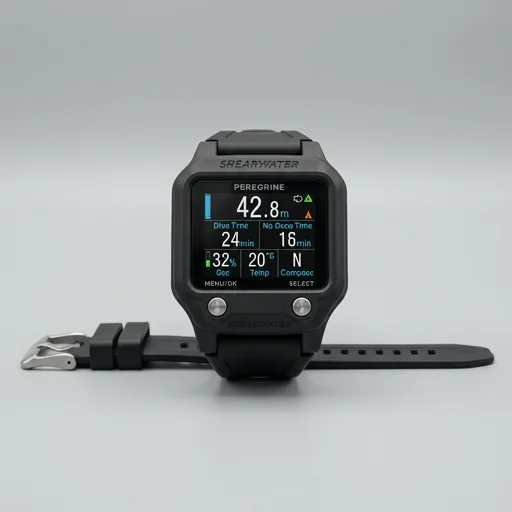
Shearwater Peregrine
- Sunlight-readable color display
- Tech-grade Buhlmann algorithm
- Rechargeable with AA backup
As an Amazon Associate we earn from qualifying purchases.
Bühlmann ZHL-16C and VPM-B, air through trimix and CCR, wireless gas integration, and a AA battery you can buy anywhere — rated to 200 m.
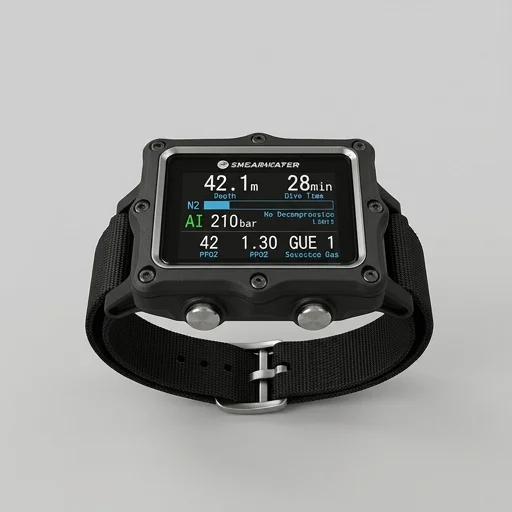
| Display | 2.2 inch color transflective LCD |
|---|---|
| Battery | Single user-replaceable AA |
| Depth Rating | 200 m / 660 ft |
| Algorithms | Bühlmann ZHL-16C with GF and VPM-B |
| Connectivity | Bluetooth Smart + wireless AI gas integration |
The Perdix AI runs a 2.2 inch full-colour transflective display readable in sunlight and murk, rated to 200 m, on a single user-replaceable AA battery. It offers Bühlmann ZHL-16C with gradient factors and VPM-B, covers air, nitrox, trimix and closed-circuit rebreather modes, and adds wireless tank pressure through an optional transmitter. Bluetooth handles firmware and log sync.
One computer that covers a recreational reef dive and a trimix wreck penetration, with two algorithm families and a tilt-compensated compass, is a rare thing. The AA battery is the underrated feature: no proprietary cell to die on a liveaboard. It is bulky on a small wrist, the menu system takes real learning, and the AI transmitter is a separate purchase.
The Perdix AI's core argument is range. It supports Bühlmann ZHL-16C with gradient factors and VPM-B, so you are not locked into one decompression philosophy, and it runs air, nitrox, trimix and closed-circuit rebreather modes in a single unit rated to 200 m. That means the same computer follows a diver from open water certification through technical training without being replaced. Display layouts are heavily customisable, so the fields you actually need can sit where you look first.
The 2.2 inch transflective colour screen is the second reason it is trusted: transflective panels use ambient light rather than fighting it, so the display stays legible in bright surface glare and in low-visibility water where backlit screens wash out or disappear. A stainless steel bezel and impact-resistant housing take boat-deck abuse, and the tilt-compensated digital compass works without holding your wrist perfectly level. Wireless gas integration adds real-time tank pressure, remaining bottom time and consumption rate when you fit the optional transmitter.
Power is where Shearwater made the most practical decision: a single user-replaceable AA. On a remote trip you carry spares instead of a charger and hope. Bluetooth handles firmware updates and log sync to Shearwater Cloud, though divers on older mobile operating systems report the pairing can be fussy. The costs are size, price and learning curve — it is bulkier and heavier on the wrist than a recreational computer, it sits well above entry level, and the menu system rewards reading the manual.